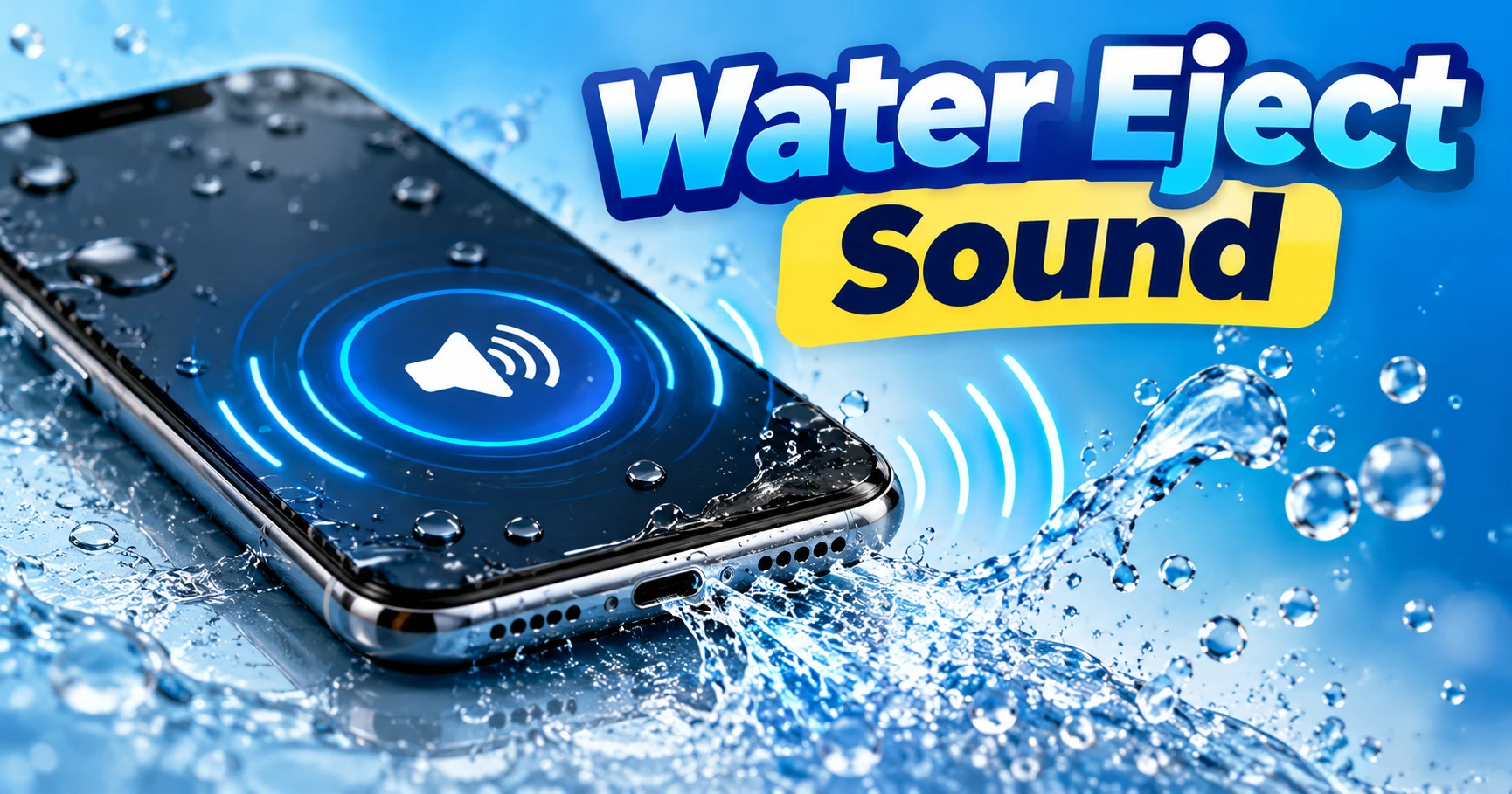
The water eject sound is a 165Hz audio tone that vibrates your phone speaker to push trapped water out through the speaker grill. Set your volume to maximum, point the speaker downward, and press play. Run the tone for 30 to 60 seconds. Repeat 2 to 3 times for heavy water exposure. Works on iPhone, Android, AirPods, and laptops in any browser. No download required.
Introduction
Water in your speaker makes audio sound muffled, flat, and far away. That happens when water sits on the speaker diaphragm and blocks sound waves from passing through the speaker mesh. The water eject sound fixes this fast. It is a low-frequency tone that vibrates the speaker diaphragm hard enough to push water out through the speaker grill. Apple built the same acoustic principle into Apple Watch Water Lock starting with Series 2. Play it right here, free, with no app to download.
How Do You Use the Water Eject Sound?
Turn your device volume to maximum. Disconnect any Bluetooth devices so audio plays through the wet phone speaker, not a paired headset. Hold your phone with the speaker grill facing down. Press play and run the water eject tone for 30 to 60 seconds. Wipe away any water droplets as they appear on the grill. Repeat the cycle if the audio is still muffled.
Follow these five steps:
- Remove your phone case. A case can trap water between the case and the phone body and push it back into the grill during the cleaning cycle.
- Disconnect Bluetooth. Go to your Bluetooth settings and disconnect any paired device. If AirPods or a Bluetooth speaker are connected, the speaker water removal sound will play through those devices instead of the wet phone speaker.
- Set volume to 100%. The speaker diaphragm only reaches its widest range of motion at full volume. Low volume means weaker vibration and less sound pressure.
- Hold the phone with the speaker grill pointing down. This lets gravity work with the acoustic vibration to push water toward the exit.
- Press play and run the water eject sound online for 30 to 60 seconds. Watch the grill for small water droplets pushing out. Wipe them away and run another cycle if the audio is still muffled.
Play the water eject tone at the eject water from speaker tool. No download. No account.
What Frequency Is the Water Eject Sound?
The water eject sound uses 165Hz as its primary frequency. This pitch sits near the resonant frequency of most smartphone speaker membranes, where the speaker diaphragm moves with the most force. Modern tools use a sweep from 50Hz to 500Hz to push water out no matter where it sits inside the speaker cavity.
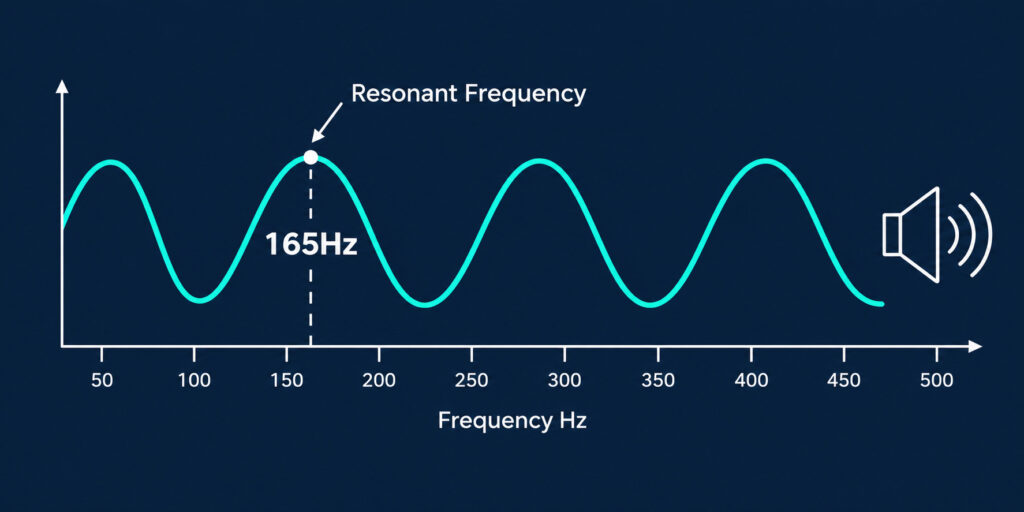
Think of resonant frequency like pushing someone on a swing. Push at the right moment and they go high. Push at the wrong moment and you kill the momentum. At 165Hz, the speaker diaphragm swings back and forth with peak power. That movement creates enough sound pressure to break the surface tension holding water droplets against the speaker mesh.
The 165Hz water eject tone became the standard after a 2016 discovery where a phone user tested frequencies on a wet iPhone 7 and watched water droplets bounce out of the speaker grill at that exact pitch. This discovery matched what Apple Inc. had already built into Apple Watch Series 2, where Water Lock plays a series of tones to push water out of the speaker port after swimming. Two separate discoveries confirmed the same acoustic vibration principle works.
Does It Have to Be Exactly 165Hz?
No. The full effective range for water ejection is 140Hz to 200Hz. Many tools now use a frequency sweep that cycles from 50Hz to 500Hz. A sweep covers more of the speaker cavity than a single 165Hz water eject tone. For light splashes, a fixed 165Hz tone works well. For full submersions, a frequency sweep is more thorough because water does not always sit in the same spot inside the speaker cavity.
How Long Should You Play the Water Eject Sound?
For a minor splash, one cycle of 30 to 60 seconds is usually enough. For a phone dropped in a pool, sink, or toilet, run 2 to 3 cycles of 60 seconds each. Take a 30-second break between cycles. Stop when water droplets stop appearing at the speaker grill and the audio sounds clear.
| Water Exposure Level | Recommended Cycles | Duration Per Cycle |
| Minor splash (sink, rain) | 1 cycle | 30 to 60 seconds |
| Shower steam or sweat | 1 to 2 cycles | 60 seconds each |
| Full submersion (pool, toilet) | 2 to 3 cycles | 60 seconds, with 30-second breaks |
The short breaks between cycles matter. They keep the speaker voice coil from warming up during longer cleaning sessions.
Does the Water Eject Sound Work on Every Device?
The water eject sound works on any device with a standard built-in speaker: iPhone, Android phones, AirPods, and laptops. The process is the same across all devices. What changes is how you hold or position the device so gravity helps the sound pressure push water out.
iPhone
Hold the phone with the Lightning or USB-C port facing down. This targets the main bottom speaker. Then flip the phone the other way and repeat for the top earpiece receiver. iPhone has two separate audio output points. Treat each one in its own cycle for the best result.
Get the full iPhone-specific steps to fix my iPhone speaker water damage.
Samsung Galaxy and Android
Samsung Galaxy phones do not have a built-in water eject feature. This surprises many Galaxy users because Samsung Galaxy Watches do include a water ejection mode, but that feature does not carry over to Galaxy phones. For Samsung Galaxy, tilt the phone at a 45-degree angle with the bottom speaker grill pointing toward the floor.
Xiaomi and Redmi phones running MIUI or HyperOS have a built-in “Clear Speaker” option under Additional Settings. That built-in burst runs for 30 seconds. For heavy water exposure, the built-in tool is too short. The water removal sound for speaker here runs longer continuous cycles with more thorough coverage.
Find Android-specific tips at Fix My Mobile Speaker.
AirPods and Earbuds
Remove the silicone ear tip before you start. Hold the AirPod by the stem with the mesh facing down. Play the 165Hz water eject tone at maximum volume and combine it with firm downward wrist-shake motions. The tone breaks the surface tension on the speaker mesh. The shaking provides the centrifugal force to move the water out. Run 2 to 3 cycles and wipe the mesh dry between each one.
Use the ear speaker cleaner sound tool for earpiece-specific frequency settings.
Laptops and Tablets
Open the laptop flat and then fold it into a tent shape (an upside-down V) so liquid drains away from the internal logic board while the tone plays. Keep the system volume at maximum. This works for MacBooks, Dell, HP, and Lenovo laptops as well as iPads and Samsung tablets.
See laptop-specific guidance at the laptop speaker cleaner.
Is the Water Eject Sound Safe for Your Phone?
Yes. The 165Hz to 500Hz range falls within the normal operating limits of every smartphone speaker on the market. Your phone already plays these exact frequencies during music and video playback. Apple Inc. confirmed this when they built acoustic vibration into Apple Watch Water Lock. Playing a water eject tone at full volume is well within the operating range Apple designed for.
Take short breaks between extended cycles. Continuous use for more than a few minutes at a time can let the voice coil build up heat. Short breaks keep the hardware safe during longer cleaning sessions.
When Should You Stop and Visit a Repair Shop?
Stop using the water eject sound and visit a technician if your phone shows any of these signs:
- The phone will not power on at all
- The device feels unusually hot or you smell something burning
- You see green or white crust forming around the charging port or SIM tray
- Crackling or static stays after the phone has been fully dry for 24 hours
These are signs the liquid damage has already reached the internal circuits. A speaker water removal sound clears physical blockages from the speaker mesh. It cannot repair shorted circuits or corroded contacts.
What Are the Signs That the Water Eject Sound Is Working?
Watch and listen during the cleaning cycle for these signals:
- Small water droplets appear visibly at the speaker grill during playback
- Muffled audio is gradually getting louder and clearer
- Bass tones are getting stronger
- Crackling sounds are reducing
Once no more droplets appear and the audio sounds clear, the water ejection is complete. Test by playing a voice memo or a short video clip at full volume. You can also run a full speaker sound test to check the bass, mid-range, and treble output across the full frequency range.
Water Eject Sound vs. Other Methods
| Method | Speed | Safety | Works on Speaker Grill | Works on Deep Moisture |
| Water eject sound (165Hz tone) | Under 60 seconds | Safe | Yes, high | No |
| Silica gel packets | 12 to 24 hours | Safe | No | Yes, high |
| Rice | Days | Risky, starch clogs ports | No | Very low |
| Compressed air | Fast | Not safe, can tear speaker diaphragm | Low | No |
| Hair dryer | Fast | Not safe, melts internal seals | None | No |
The best approach uses both safe options together. Play the water eject sound online to clear the speaker grill fast, then seal the phone in a bag with silica gel packets overnight. The acoustic vibration clears the main water exit path. Silica gel pulls the remaining liquid damage moisture from deeper inside the device.
For a speaker that sounds clogged with dry dust and pocket lint instead of water, the fix my speaker dust tool uses a different vibration approach for that problem.
What Should You Do If the Speaker Is Still Muffled After the Water Eject Sound?
Run 2 to 3 more cycles with the speaker grill pointing down. If the audio is still muffled after 5 total cycles, seal the phone in a zip-lock bag with silica gel packets for 12 to 24 hours. Silica gel pulls residual moisture from inside the phone that the water eject sound cannot reach.
Step 1: Run more cycles. Keep the speaker facing down. Let 30 seconds pass between each cycle.
Step 2: Use silica gel backup. Silica gel packets, the kind often found in shoe boxes or vitamin containers, absorb moisture from the air around the phone. They pull out the deeper humidity that acoustic vibration cannot reach.
Step 3: If static or crackling stays after the phone has been fully dry for 24 hours, the speaker membrane may be physically torn or the voice coil may have corroded. At that point, a repair shop is the next step. The water eject sound is a cleaning tool. It clears physical blockages from the speaker mesh and speaker grill. It cannot repair hardware that has already been damaged by water or liquid damage.
Play the Water Eject Sound Right Now
Your speaker can sound clear again in under 60 seconds. Play the free water eject sound at the tool above and test your speaker quality afterward.
Frequently Asked Questions
What is the water eject sound?
The water eject sound is a low-frequency audio tone, most commonly 165Hz, that plays through a phone speaker at full volume. The sound causes the speaker diaphragm to vibrate at its resonant frequency. That movement creates enough sound pressure to break the surface tension holding water droplets against the speaker mesh. The water droplets get pushed out through the speaker grill. Apple Inc. built the same acoustic vibration principle into Apple Watch Water Lock starting with Series 2.
What frequency is the water eject sound?
The standard water eject sound frequency is 165Hz, which sits near the resonant frequency of most smartphone speaker membranes. Many tools also use a sweep from 50Hz to 500Hz to cover more of the speaker cavity. Both the 165Hz water eject tone and a wider frequency sweep fall within the safe operating range of any modern phone speaker.
Does the water eject sound work on Android?
Yes. The water eject sound online works on any Android phone with a built-in speaker. Open the tool in Chrome or Samsung Internet, set volume to 100%, and hold the speaker grill facing down. Samsung Galaxy phones have no built-in water eject feature, so a browser-based tool is the easiest option for Android water ejection.
Can the water eject sound damage my speaker?
No. The frequencies used for water ejection, between 165Hz and 500Hz, fall within the standard operating range of every smartphone speaker. Your phone plays these same frequency ranges during normal music and video playback. Take short 30-second breaks between extended cycles to keep the voice coil at a safe temperature. A healthy speaker will not be harmed by this process.
How many times should I play the water eject sound?
For a light splash, one cycle of 30 to 60 seconds is usually enough. For a phone dropped in a pool, sink, or toilet, run 2 to 3 cycles of 60 seconds each with 30-second breaks between cycles. Stop when no more water droplets appear at the grill and the audio sounds clear again.
Does iPhone have a built-in water eject sound?
No. iPhone does not have a native water eject sound built into iOS. The Water Eject Shortcut, available in the iOS Shortcuts app, plays a 165Hz tone for about 12 seconds. For heavier water exposure, a browser-based tool running longer continuous cycles gives better results than the short Shortcuts burst.
Can I use the water eject sound on AirPods?
Yes. Remove the silicone ear tip first. Hold the AirPod by the stem with the speaker mesh facing down. Play the 165Hz water eject tone at maximum volume and combine it with firm, sharp downward wrist-shake motions. The tone breaks the surface tension on the speaker mesh. The shaking moves the water out. Run 2 to 3 cycles and wipe the mesh dry between each one.