HiFi stands for high fidelity, which means faithful reproduction of recorded sound with minimal distortion, balanced frequency response, and full dynamic range. A true hifi system makes recorded music sound as close to a live performance as possible. It requires clean source material, quality playback hardware, and properly working speakers. Understanding hifi audio explained starts with knowing what the full signal chain needs to do its job.
HiFi, short for high fidelity, is the pursuit of sound that stays faithful to the original recording. Not every speaker, every app, or every audio format qualifies. The global hifi electronics market is projected to reach 40.21 billion dollars by 2036, according to Future Market Insights. That growth is driven by people who want to hear their music, not a compressed version of it. Before you buy anything or change any settings, it helps to know the high fidelity audio definition, what it requires, and whether your current setup can get you there.
What Does HiFi Actually Mean?
HiFi meaning is simple at its core: high fidelity. The word “fidelity” means faithfulness or accuracy. In audio, what is hifi audio comes down to a sound system’s ability to reproduce a recorded signal with very little distortion, covering the full range of audible frequencies, and preserving the quiet details and loud peaks of the original performance.
When a musician records a song in a studio, that recording captures every instrument, every breath, and every small sound. The goal of a hifi system is to play back that recording exactly as it was captured. Nothing added. Nothing removed.
This idea sits on a quality scale. At the low end is lo-fi, which describes audio with heavy noise, distortion, or missing frequency ranges. In the middle is mid-fi, which covers decent consumer electronics that get most things right but not everything. At the top is hi-fi, where the sound is clean, accurate, and detailed.
Is HiFi the Same as Stereo?
No, and this is one of the most common mix-ups in audio discussions.
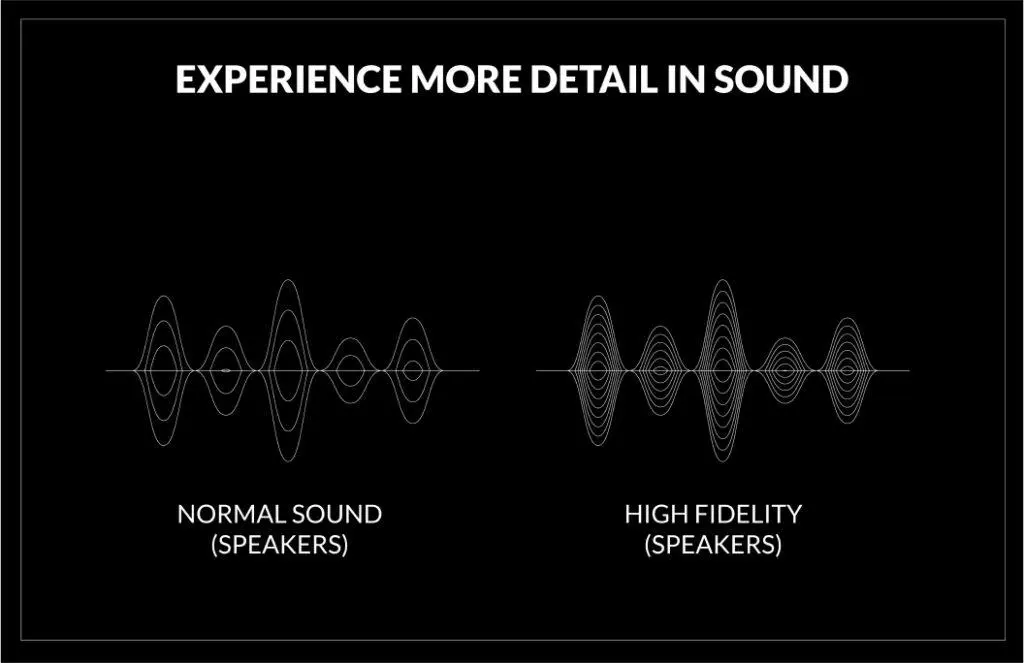
Stereo refers to audio played through two separate channels, left and right, to create a sense of width and space in the sound. HiFi refers to the quality standard of the sound reproduction, no matter how many channels are involved.
A system can be stereo without being hifi. A cheap pair of computer speakers with two channels is stereo. It is not hifi. A mono speaker with just one channel can still technically deliver hifi-quality audio if the driver and amplifier meet the right standards.
Every hifi system is stereo, but not every stereo system is hifi. Keeping hifi vs stereo separate in your mind makes the rest of this much easier to follow.
What Makes Audio Qualify as HiFi?
For audio to qualify as hifi, it needs to pass five basic tests. This is where hifi audio explained gets technical, but the concepts are straightforward once you see them side by side.
1. Low distortion Distortion happens when the speaker adds unwanted sounds to the signal. A buzz, a roughness, or a harsh edge at high volume all point to distortion. Hifi equipment keeps distortion levels so low that your ears cannot detect them during normal listening.
2. Flat frequency response The human hearing range runs from 20Hz to 20,000Hz. A hifi system reproduces all of those frequencies at an even level. It does not push up the bass to sound powerful or cut the treble to sound smooth. It plays every frequency as accurately as possible.
3. Wide dynamic range Dynamic range is the gap between the quietest sound a system can reproduce and the loudest sound it can play without breaking apart. A wide dynamic range means you hear the full contrast in a piece of music, from the softest whisper to a loud drum strike.
4. Strong soundstage and stereo imaging A good hifi system makes you feel like the instruments are placed around you in a physical space. The violin sits to the left. The piano sits slightly behind and center. This sense of placement is called soundstage. Stereo imaging describes how accurately your system recreates that placement across both channels.
5. Clean signal-to-noise ratio The signal-to-noise ratio measures how much actual music you hear versus background noise the equipment adds. A high signal-to-noise ratio means total silence during quiet passages, not a faint hiss behind the music.
A 2016 study by Joshua Reiss at Queen Mary University of London, published by the Audio Engineering Society, found that many people can hear the difference between standard CD-quality audio and high-resolution audio tracks that use 24 or 32 bits per sample. The technical details of hifi are not just numbers on paper for a good portion of listeners.
A Brief History of HiFi
The word “hifi” has been around for over 70 years, and the technology behind it goes back even further.
In the early 1930s, Bell Laboratories began testing multi-microphone recording techniques. Conductor Leopold Stokowski worked with the Philadelphia Orchestra on early stereo recordings, capturing sound across multiple channels to create a more real sense of space and depth.
By the 1950s, home audio equipment had improved enough that listeners could clearly tell the difference between a faithful reproduction and a poor one. The term “hi-fi” came into common use during this period to describe equipment and vinyl records that delivered accurate, detailed sound.
The 1960s brought stereo to mainstream homes. Music stores sold turntables, amplifiers, and passive speakers as a matching set. The terms “hi-fi” and “stereo” became so connected that many people started using them to mean the same thing, even though they describe different things.
In the 1980s, the CD changed everything. CDs used a sample rate of 44.1 kHz and a bit depth of 16-bit, which became the new standard for digital hifi audio. A CD could store over 65,500 amplitude values per sample, which covered nearly the full range that human ears can detect.
The 2000s brought a setback. Streaming services compressed audio files to save storage space and reduce loading times. MP3s and similar formats removed audio data that engineers thought people would not miss. Many audiophiles and readers of What HiFi magazine noticed.
From the 2010s onward, lossless streaming changed the picture again. Services like Tidal, Qobuz, Apple Music, and Amazon Music HD began offering CD-quality or better audio streams. Spotify joined this group with its own lossless rollout in 2025 and 2026. According to 360 Research Reports, 46 percent of US hifi system owners now use lossless streaming as their main source.
What Equipment Do You Need for HiFi?
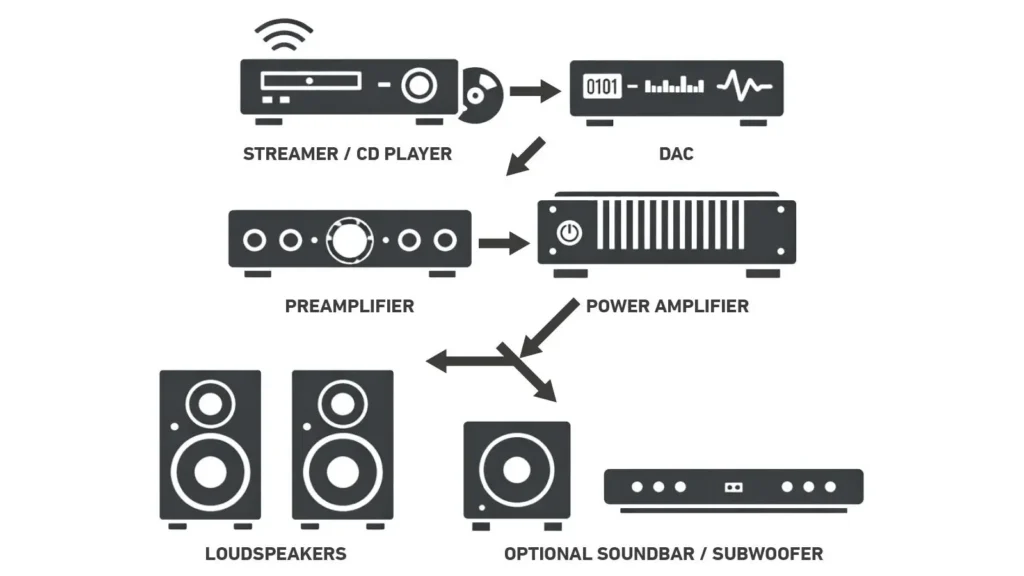
A hifi system is not a single device. It is a chain of components, and each one has a specific job. Understanding what is a hifi system means understanding how those parts work together.
Source The source is where your audio comes from. That could be a CD player, a turntable for vinyl records, or a streaming service connected through a network player. The quality of the source matters because the entire chain works with whatever the source sends through.
For turntable setups, a phono stage or RIAA preamp is also part of the chain. This small component amplifies the very low signal from a turntable cartridge before it reaches the main amplifier.
DAC (digital-to-analog converter) Most audio today is stored as digital data. A DAC converts that data into an analog electrical signal that an amplifier can work with. Many streaming devices have a DAC built in. Dedicated external DACs generally do a cleaner job at this conversion step.
Amplifier The amplifier takes the signal from the DAC and boosts it to a level strong enough to drive speakers. An integrated amplifier combines a preamp and a power amp into one unit, which is a practical and affordable starting point for most setups.
Speakers Speakers turn the electrical signal into sound waves. Most hifi setups use passive speakers, meaning they need an amplifier to power them. The speaker’s woofer handles low and midrange frequencies. The tweeter handles high frequencies. Bookshelf speakers work well for smaller rooms. Floor-standing speakers bring more bass output for larger spaces.
Room acoustics The room itself shapes the final sound. Hard walls reflect sound back into the space. Soft furnishings and rugs absorb it. Even a great hifi system sounds average in a room with poor acoustic properties.
What Is a DAC and Why Does HiFi Need One?
A DAC, or digital-to-analog converter, takes the digital audio data in a file or stream and turns it into an analog electrical signal. Every digital playback device, including your phone, has a DAC built in. The quality of that built-in DAC varies a lot from device to device.
High-end standalone DACs reduce noise at the conversion stage and pull more fine detail from the recording. This is why some audiophiles buy a separate DAC rather than relying on the one inside their phone or laptop.
Do Phone Speakers or Bluetooth Earbuds Qualify as HiFi?
Most phone speakers do not qualify as hifi. Their physical drivers are too small to cover the low frequency range below roughly 200Hz with any real accuracy. They also lack the power needed to maintain tonal balance across the full 20Hz to 20,000Hz range.
Bluetooth earbuds are a more complicated case. Bluetooth audio passes through a codec, which compresses the signal to send it wirelessly. Some codecs, including aptX HD, LDAC, and AAC, compress far less than older Bluetooth standards. But even these fall short of a wired lossless connection.
For a real hifi experience, dedicated speakers connected to a quality amplifier, or wired headphones paired with a good DAC, remain the standard.
You can test whether your current speakers are covering the full frequency range with the free speaker sound test. Run it at full volume and listen for anything missing at the low or high end.
To confirm both channels are working and balanced, run the stereo sound tester in under a minute.
What Are HiFi Audio Formats and File Types?
Not every file format carries hifi-quality audio. Here is a clear breakdown of what qualifies and what does not.
Lossy formats (not hifi) MP3 and AAC compress audio by removing data that algorithms decide is less important. This reduces file size but throws away audio information. MP3 files top out at 320 kilobits per second, which falls short of CD quality.
Uncompressed lossless formats (hifi) WAV and AIFF are uncompressed formats that carry the full audio signal with no data removed. WAV was developed by Microsoft. AIFF was developed by Apple. Both deliver CD-quality or better audio. The trade-off is large file sizes.
Compressed lossless formats (hifi) FLAC, short for Free Lossless Audio Compression, and ALAC, short for Apple Lossless Audio Codec, compress files without removing any audio data. The original signal is recovered completely during playback. FLAC works across most platforms. ALAC fits particularly well within Apple systems. Many audiophiles consider FLAC a reliable gold standard for everyday hifi listening.
MQA MQA is a proprietary format used mainly by Tidal. It is technically lossy but uses a packaging technique that many listeners find hard to tell apart from full lossless quality, at smaller file sizes.
Streaming services that offer hifi tiers Apple Music, Tidal, Qobuz, and Amazon Music HD all offer lossless or high-resolution audio at CD quality or better. Spotify rolled out its own lossless tier to premium users starting in 2025 and 2026. The streaming hi-fi devices market hit 2.3 billion dollars in 2022 and is growing at 11 percent per year according to Gitnux, showing how fast casual listeners are moving toward better quality streams.
Can Your Speakers Actually Deliver HiFi Sound?
Here is something most hifi guides skip entirely.
HiFi audio starts at the source and ends at the speaker cone. You can have a great DAC, a clean integrated amplifier, and a lossless FLAC file streaming from Qobuz. If your speakers are physically compromised, you will not hear what the rest of the chain worked to deliver.
There are three main ways a speaker physically limits hifi reproduction.
Driver size and frequency range A small driver cannot move enough air to produce accurate bass frequencies. Most phone speakers and many low-cost Bluetooth speakers cannot reproduce sounds below 150Hz to 200Hz with any real accuracy. A proper hifi speaker system uses a woofer for low and mid frequencies and a tweeter for high frequencies, covering the full 20Hz to 20,000Hz range that human hearing requires.
Frequency response limitations Even a full-size speaker can be tuned to boost bass or cut certain frequencies. Consumer-grade speakers often do this to sound impressive in a store. A hifi speaker aims for a flat frequency response across the entire range, playing every frequency at an equal level rather than a hyped one.
Physical blockage This one gets missed most often. Dust, pocket lint, and trapped moisture block the speaker grill and restrict the movement of the driver cone. When the driver cannot move freely, high frequencies get muffled first. A speaker that sounds clean when new can start losing treble detail and tonal balance after weeks of normal use in any dusty environment.
A hifi experience starts with hardware that is clean and fully functional. If your speakers sound quieter than usual, or if certain frequencies sound dull or muffled, physical blockage may be the cause before any other component in the chain.
Use the free speaker sound test to confirm your speakers are covering the full frequency range. If low-end response sounds missing or weak, the Fix My Speaker tool is a practical starting point.
Is HiFi Worth It for Everyday Listeners?
The short answer is yes, with a few honest conditions attached.
The global hifi electronics market was valued at 18.62 billion dollars in 2026 and is projected to reach 40.21 billion dollars by 2036, growing at 8 percent per year, according to Future Market Insights. That growth is not driven only by dedicated audiophiles. Casual listeners are finding out what their music actually sounds like when the compression is removed.
Why hifi is worth it:
- You hear details in recordings that compressed formats hide, like a guitar string settling or the natural reverb of a recording room
- Lossless streaming from Apple Music, Tidal, or Qobuz now costs the same as a standard subscription in most markets
- Modern integrated amplifiers and bookshelf speakers are available at approachable prices without sacrificing real audio quality
- Once you hear music through a clean, flat-response system, going back to Bluetooth earbuds is difficult
Where hifi has real limits:
- Equipment matching matters more than any single component purchase
- Room acoustics can cancel out expensive gear if the space is not treated
- Not all music is available in lossless formats on every platform
- A blocked or damaged speaker cancels any gain from the rest of the setup
Hifi is not just for people who own turntables or subscribe to What HiFi magazine. Wireless hifi systems now make up nearly 52 percent of new units sold, according to 360 Research Reports. Getting closer to a hifi experience is more accessible than it has ever been.
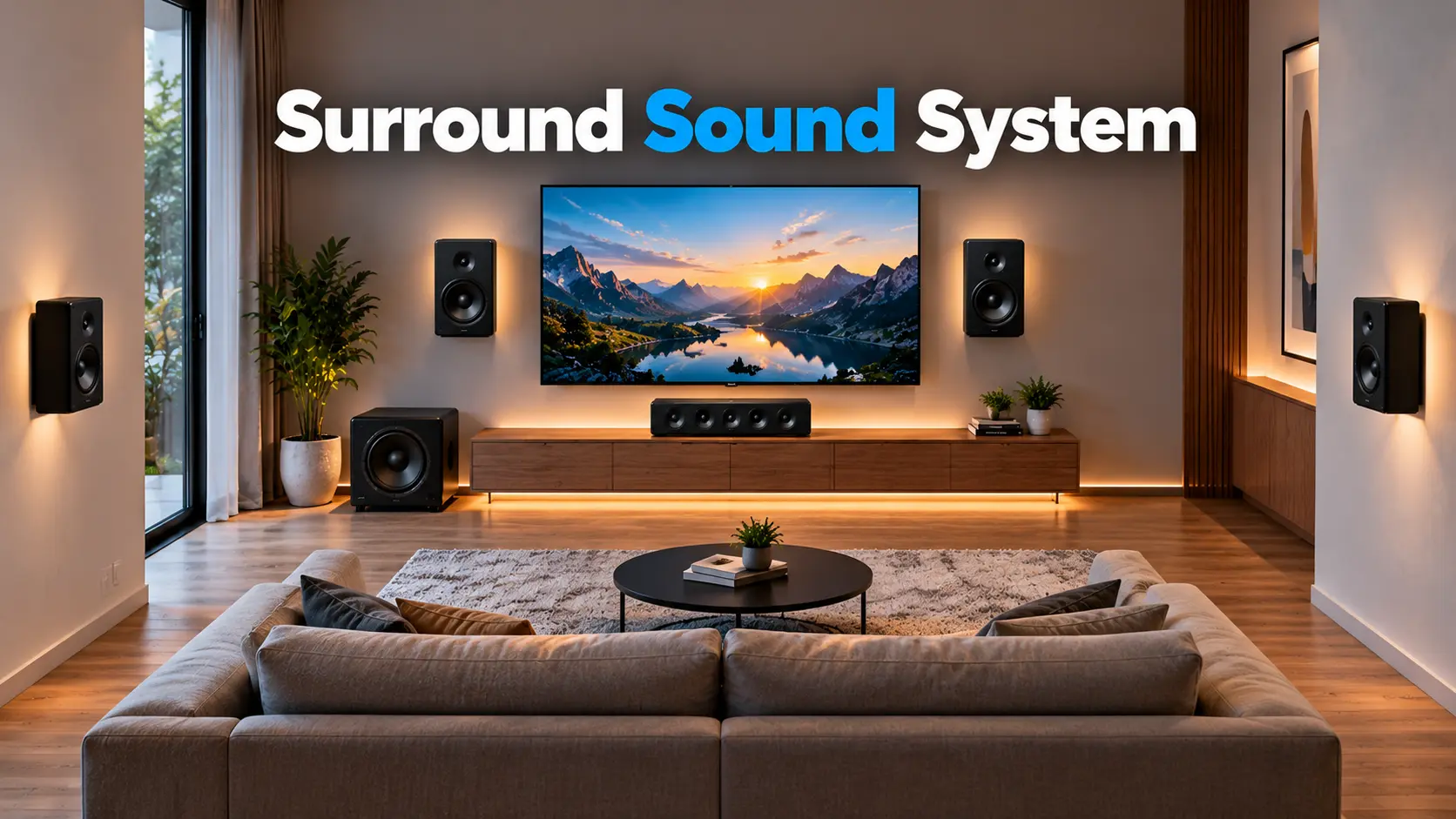
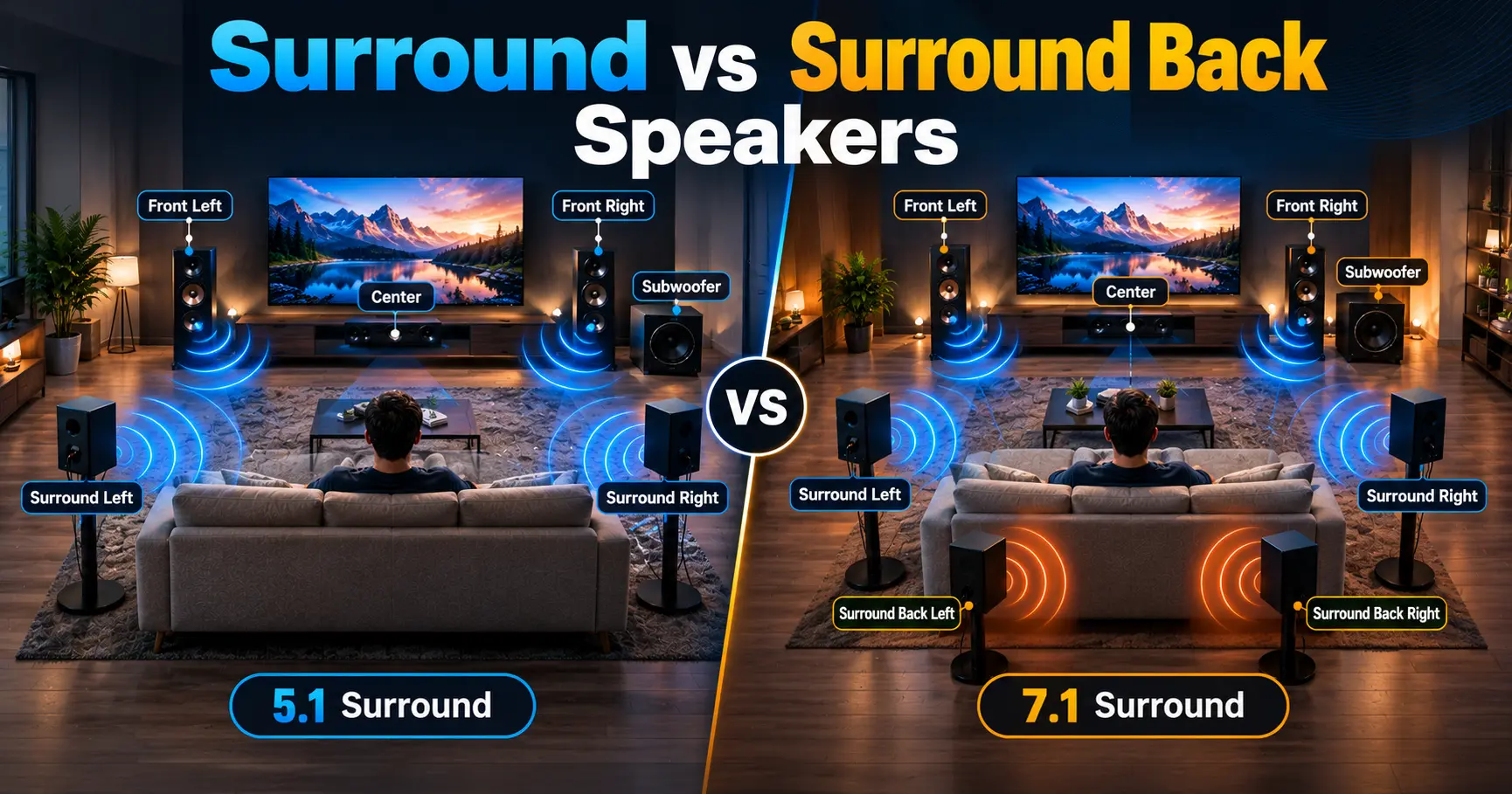
If you want to go beyond stereo into three-dimensional sound, spatial audio builds on hifi principles to place sound around you in all directions. If you have a multi-speaker setup at home, the surround sound test confirms whether all channels are working as expected. For more on surround setups, the guide on what is surround sound covers how hifi principles carry into multi-channel audio.
Test Your Speakers Before Anything Else
HiFi audio lives or dies at the speaker. A great source, a clean DAC, and a solid amplifier all send their output through one final piece of hardware. If that hardware is blocked, worn, or physically limited, you will not hear what the rest of the chain worked to produce.
Before changing any equipment or subscription tier, check whether your current speakers are clean and covering the full frequency range. The free speaker sound test plays test tones across the full range and lets you hear exactly where your speakers fall short. Run the stereo sound tester to confirm both channels are balanced and working correctly.
A hifi experience starts with hardware that is ready for it.
Frequently Asked Questions
What does HiFi stand for?
HiFi stands for high fidelity. The word fidelity means faithfulness or accuracy. In audio, it describes a system’s ability to reproduce a recorded signal with very little distortion, covering the full human hearing range of 20Hz to 20,000Hz, and preserving the detail of the original performance.
What is the difference between HiFi and stereo?
Stereo refers to audio played through two separate channels, left and right, to create a sense of width and space. HiFi refers to the quality standard of the sound reproduction, regardless of how many channels are used. A system can be stereo without being hifi. Every hifi system is stereo, but not every stereo system qualifies as hifi.
What streaming services offer HiFi quality audio?
Apple Music, Tidal, Qobuz, and Amazon Music HD all offer lossless or high-resolution audio that meets the CD-quality baseline for hifi. Spotify rolled out its own lossless tier to premium users in 2025 and 2026. A lossless audio stream at 16-bit and 44.1 kHz meets the foundational technical standard for hifi.
Can a phone speaker produce HiFi audio?
Standard phone speakers cannot produce true hifi audio. Their physical drivers are too small to cover the bass frequency range with any accuracy. They also lack the power to maintain tonal balance across the full 20Hz to 20,000Hz range. For genuine hifi, dedicated speakers connected to an amplifier or wired headphones with a good DAC are needed.
What is lossless audio and is it the same as HiFi?
Lossless audio is a digital format that compresses files without throwing away any audio data. FLAC and ALAC are the most common lossless formats. Lossless audio at CD resolution, which is 16-bit and 44.1 kHz, meets the technical baseline for hifi. High-resolution lossless formats at 24-bit and 96 kHz or higher go beyond CD quality and are often called hi-res audio.
Do you need expensive equipment to experience HiFi?
Not necessarily. An entry-level setup with a lossless streaming source, a budget integrated amplifier, and a pair of bookshelf speakers can deliver a real hifi experience for a few hundred dollars. The biggest gains come from matching components correctly and making sure your speaker hardware is clean and physically functional.
What is a DAC and why does HiFi need one?
A DAC is a digital-to-analog converter. It takes the digital audio data in a file or stream and turns it into an analog electrical signal that a speaker or headphone can use. Every digital playback device has one built in. The quality of that built-in DAC affects how much detail and accuracy reaches your ears. A dedicated external DAC reduces noise at the conversion stage and recovers more fine detail from the original recording.