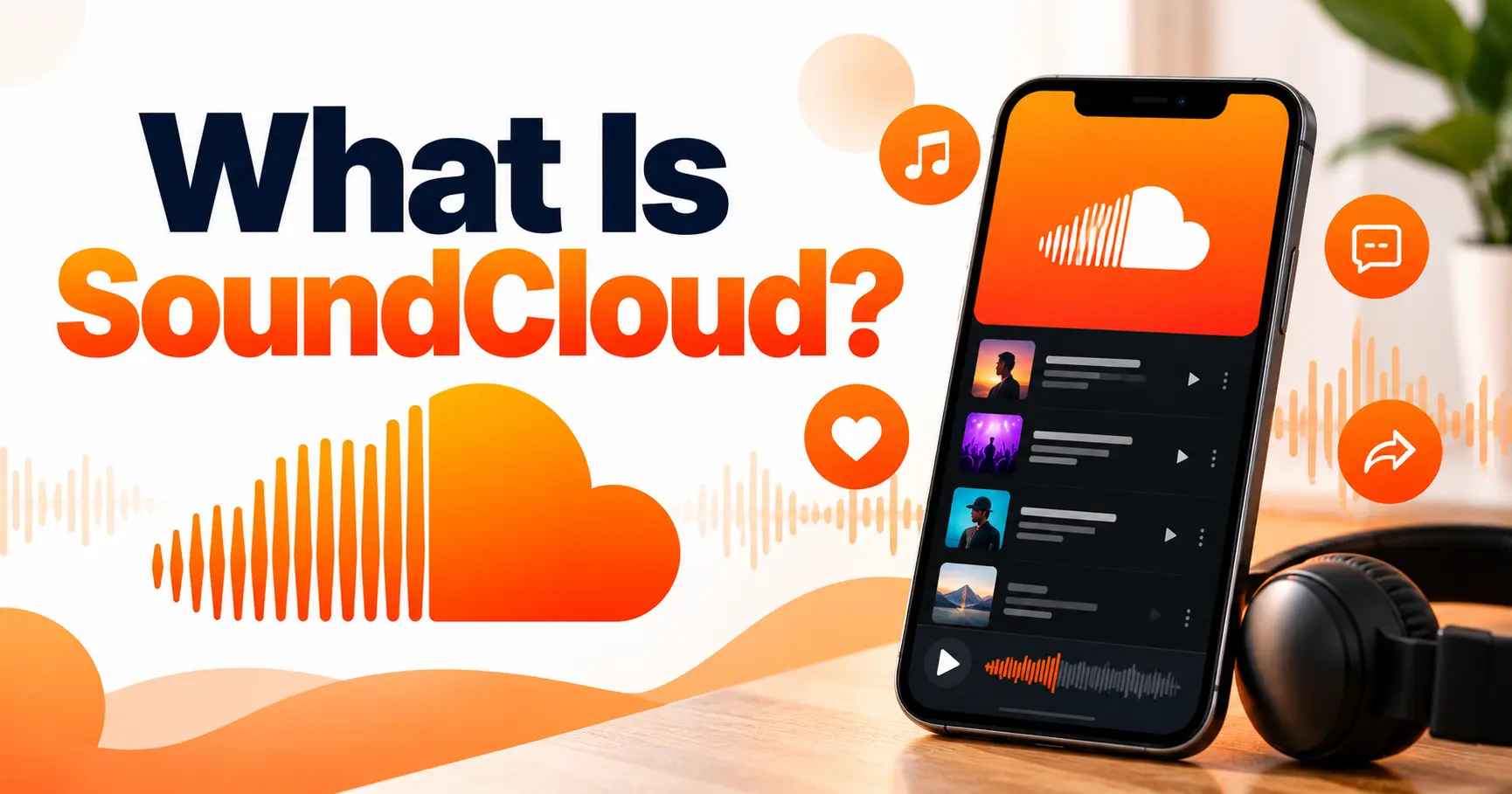
SoundCloud is a free online audio platform where anyone can upload and share music, podcasts, and other audio content. Founded in 2007, it hosts over 375 million tracks from independent artists, DJs, and major labels. It has a free ad-supported tier and paid plans that remove ads or add offline listening. It is best known as a launchpad for emerging artists and as the home of content you cannot find on Spotify.
You have probably heard the name SoundCloud before. Maybe a friend mentioned an artist who got their start there, or you saw it come up while looking for music online. So what is SoundCloud, exactly?
This guide covers everything you need to know. You will learn what the platform does, how it works, what it costs, how it differs from Spotify, and who it is built for. By the end, you will know whether SoundCloud is worth your time as a listener or a creator.
What Is SoundCloud?
SoundCloud is an online audio distribution platform and music sharing website. It lets users upload, stream, and share music, podcasts, DJ sets, and other audio content. Anyone can post tracks without a record label or a music distributor. Listeners can access a huge catalog of songs for free through a browser or the SoundCloud app.
Alexander Ljung and Eric Wahlforss founded SoundCloud in 2007 while studying engineering at KTH Royal Institute of Technology in Stockholm, Sweden. The platform launched publicly in October 2008 and moved its headquarters to Berlin, Germany, where it still operates today.
SoundCloud has grown into one of the largest music streaming services in the world. As of 2025, it hosts over 375 million tracks. That is about four times the size of Spotify’s catalog. The difference comes from SoundCloud’s open upload system. The platform accepts content from everyone, including bedroom producers, DJs, podcasters, and independent artists who have never signed with a label.
By late 2025, SoundCloud had reached 180 million users worldwide, with 76 million active monthly listeners and more than 40 million creators posting content on the platform.
How Does SoundCloud Work?
SoundCloud works by giving creators a public profile page where they can upload audio files directly. Once a track goes up, it is live and searchable right away. Listeners can find it through search, artist profiles, playlists, or the platform’s home feed.

What Can Listeners Do?
- Stream millions of tracks for free without creating an account
- Follow artists and get notified when they post new music
- Build playlists and save tracks
- Leave timed comments at specific moments in a track
- Share tracks across other platforms
The timed comment system is one of SoundCloud’s most well-known features. Fans can drop a comment at the exact second of a track where something stood out to them. This turns listening into a shared conversation between artists and fans.
What Can Creators Do?
- Upload audio files with no distributor or label required
- See play counts, likes, reposts, and listener data through a built-in stats dashboard
- Embed a SoundCloud player on a personal website or blog
- Message fans and other artists directly
- Repost other creators’ tracks to their own followers
SoundCloud is available on the web, iOS, Android, Sonos, Chromecast, and Xbox. Before you start a listening session, a quick speaker sound test on your phone can confirm your audio is coming through clearly.
Is SoundCloud Free?
Yes, SoundCloud is free to use as a listener. You can stream public tracks without signing up or paying anything. The free tier is ad-supported, so you will hear short audio ads between tracks. There is no offline listening on the free plan.
SoundCloud offers paid plans for both listeners and creators.
Listener Plans
| Plan | Price | What You Get |
| Free | $0 | Ad-supported streaming, full public catalog |
| SoundCloud Go | $4.99/month | Ad-free, offline listening |
| SoundCloud Go+ | $10.99/month | Ad-free, offline, full catalog, 256 kbps audio quality |
Creator Plans
| Plan | Price | What You Get |
| Free (Next) | $0 | Upload up to 3 hours of audio, basic stats |
| Next Plus | ~$2.50/month | 6 hours upload, scheduling, enhanced profile |
| Next Pro | ~$8.25/month (billed annually) | Unlimited upload, monetization, advanced stats, Spotlight |
One thing to know: iOS users pay slightly more for subscriptions because Apple charges a fee on all in-app purchases. You can avoid this by signing up through soundcloud.com instead of through the app.
What Makes SoundCloud Different from Spotify?
The biggest difference between SoundCloud and Spotify is the upload system.
Spotify only accepts music through approved distributors. An artist needs to go through a third-party service like DistroKid or TuneCore before their music appears on Spotify. SoundCloud lets anyone upload a track in minutes with no middleman.
This open music platform approach creates a very different kind of catalog. SoundCloud hosts over 375 million tracks including demo recordings, DJ sets, remixes, and experimental audio that no distributor would process. Spotify’s catalog of about 82 million tracks is made up mostly of licensed, professional releases.
Here is a look at the other key differences:
| Feature | SoundCloud | Spotify |
| Upload access | Open to anyone | Requires a distributor |
| Catalog size | 375 million+ tracks | ~82 million tracks |
| Free audio quality | 64 kbps | 96-160 kbps |
| Paid audio quality | 256 kbps AAC (Go+) | Up to 320 kbps (lossless added 2025) |
| Community features | Timed comments, direct messages, follows | Collaborative playlists, Spotify Wrapped |
| Best for | Underground and independent music discovery | Mainstream listening and algorithm playlists |
Neither platform is better across the board. Most serious music fans use both. Spotify works well for mainstream, curated listening. SoundCloud works better for finding music you have never heard before, from artists who are not on anyone’s radar yet.
If you are interested in how audio format and quality affect what you hear, the guide to spatial audio explains how sound processing works on modern devices and apps.
What Is SoundCloud Used For?
SoundCloud serves several different groups of people, and it works well for all of them.
For listeners, it is a music discovery tool. You can find emerging artists on SoundCloud long before they show up on Spotify or Apple Music. The open platform model means there is always something new to hear from creators who are not on anyone’s mainstream radar yet.
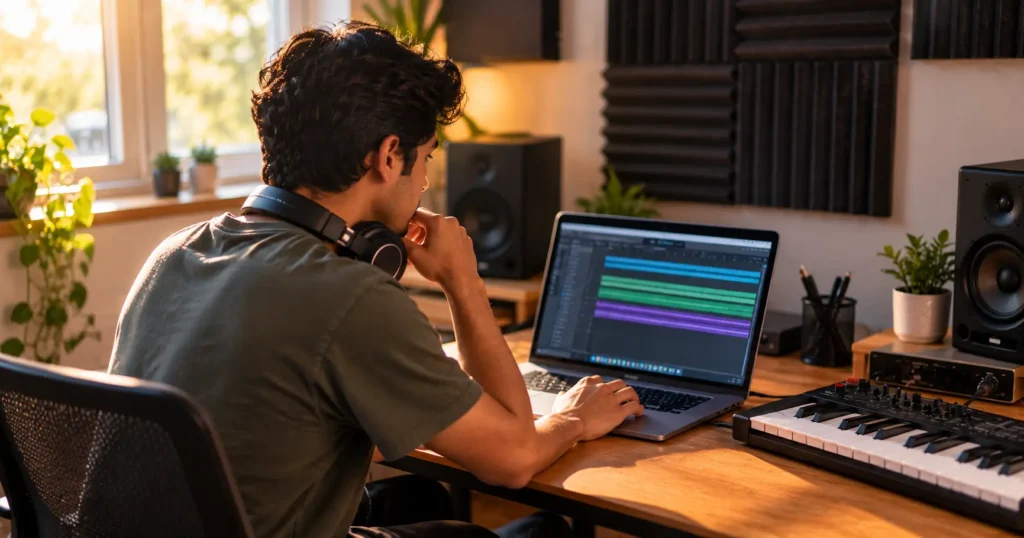
For musicians, SoundCloud is a place to share work, grow a fanbase, and get direct feedback from listeners. Independent artists do not need a label or a distributor. They upload a track and start getting plays that same day.
For DJs and producers, SoundCloud is the standard platform for sharing mixes, bootleg remixes, and experimental sets. These types of audio do not pass copyright review on other platforms, so SoundCloud is often the only option.
For podcasters, SoundCloud offers a simple hosting and sharing setup for audio shows of all kinds.
Some of the biggest names in music used SoundCloud early in their careers. Billie Eilish, Post Malone, Chance the Rapper, Lil Uzi Vert, Juice WRLD, Bad Bunny, Lorde, Kehlani, Roddy Ricch, and NLE Choppa all built early audiences through the platform before major labels came calling. The term “SoundCloud rapper” entered pop culture around 2015 to 2018, describing a generation of artists who bypassed traditional music industry gatekeeping entirely and connected directly with fans through free music sharing.
How Do Artists Get Paid on SoundCloud?
Artists on paid creator plans can earn money through Fan-Powered Royalties (FPR). This is SoundCloud’s own royalty system, and it works in a way that no other major streaming service has matched.
On Spotify, all streaming revenue gets pooled and split among rights holders based on their share of total platform streams. A mega-popular artist with billions of plays takes a large share of that pool, even from listeners who never played their music.
SoundCloud’s FPR model works differently. Each listener’s subscription or ad revenue goes only to the artists that listener personally heard that month. If you spend most of your time listening to an independent hip-hop artist, the money your account generates goes directly to that artist. Your listening behavior directly pays the musicians you actually support.
In real numbers, Fan-Powered Royalties pay between $0.005 and $0.012 per engaged play. Spotify’s average sits at roughly $0.003 to $0.005 per stream. Artists with small but loyal audiences tend to earn more per play on SoundCloud under this model. According to a Midia Research report cited by SoundCloud, over 56% of artists on FPR earn more than they did under the old pooled system.
There is no minimum stream count required to start earning. Any artist with a Next Pro or Artist Pro plan who has turned on monetization can take part.
In November 2025, SoundCloud also removed its 20% distribution fee. Artist Pro subscribers now keep 100% of royalties from Spotify, Apple Music, TikTok, and more than 60 other digital service providers.
How Do You Listen to SoundCloud on Your Phone?
Listening to SoundCloud on your phone takes just a few steps.
- Open soundcloud.com in your phone browser, or download the SoundCloud app from the iOS App Store or Google Play.
- No account is needed to browse and play public tracks. To follow artists, save music, or upload content, create a free account.
- Use the search bar to find an artist, a song title, or a genre. You can also scroll the home feed for suggested tracks.
- Press play on any track. Set your phone volume to a comfortable level.
- For offline listening, sign up for SoundCloud Go ($4.99/month) or Go+ ($10.99/month) and download tracks to your device.
One factor that affects how SoundCloud sounds is the speaker delivering the audio. The platform streams at up to 256 kbps AAC on Go+, which carries a lot of detail that a clean speaker can reproduce. If your phone speaker sounds muffled, quiet, or crackly during playback, dust or water sitting inside the speaker grill may be cutting the audio quality.
The free Fix My Speaker tool uses a 165 Hz acoustic tone to push that blockage out and restore clear sound. You can also run a stereo sound test to confirm both channels are working before you start listening. And if you want to understand how your phone handles more advanced audio formats, the guide to surround sound covers how multichannel audio works on mobile devices.
Get the Most Out of Every Listen
Music streaming on SoundCloud sounds only as good as the speaker delivering it. If your phone speaker sounds muffled or quiet while you listen, water or dust may be sitting inside the speaker grill. The free Fix My Speaker tool uses a 165 Hz acoustic tone to push that blockage out and restore clear, full sound in minutes. No download needed. Open it in your browser, turn the volume all the way up, and let the tone do the work.
Frequently Asked Questions About SoundCloud
Is SoundCloud free to use?
Yes. You can listen to millions of tracks on SoundCloud without paying or creating an account. The free tier is ad-supported. Paid plans starting at $4.99 per month remove ads and add offline listening.
What is the difference between SoundCloud Go and SoundCloud Go+?
SoundCloud Go costs $4.99 per month and removes ads while adding offline listening. SoundCloud Go+ costs $10.99 per month and gives you everything in Go plus access to the full catalog and higher audio quality at 256 kbps AAC. Go+ is the better pick if sound quality matters to you.
How is SoundCloud different from Spotify?
The main difference is the upload system. Anyone can upload music to SoundCloud directly. Spotify only accepts music through approved distributors. SoundCloud also carries DJ mixes, remixes, and demos that Spotify does not host. Spotify has a larger mainstream catalog. SoundCloud has more underground and independent content.
How many songs does SoundCloud have?
As of late 2025, SoundCloud hosts over 375 million tracks. That is roughly four times the size of Spotify’s catalog. The large number exists because SoundCloud accepts user-generated content including demos, DJ sets, and remixes that major streaming platforms do not allow.
Can you make money on SoundCloud as an artist?
Yes. Artists on paid creator plans can earn through Fan-Powered Royalties, which pay based on how much their actual fans listen rather than total platform streams. Estimated earnings are $0.005 to $0.012 per engaged play. There is no minimum stream count required to start earning.
Do you need an account to use SoundCloud?
No. You can listen to any public track on SoundCloud without signing up. You need an account to follow artists, like tracks, build playlists, and upload your own content.
Is SoundCloud still popular in 2025/26?
Yes. SoundCloud reached 180 million global users in 2025 and hosts over 375 million tracks. Revenue grew year over year from 2021 through 2025. It remains the leading platform for independent artists, underground music discovery, and DJ mixes.