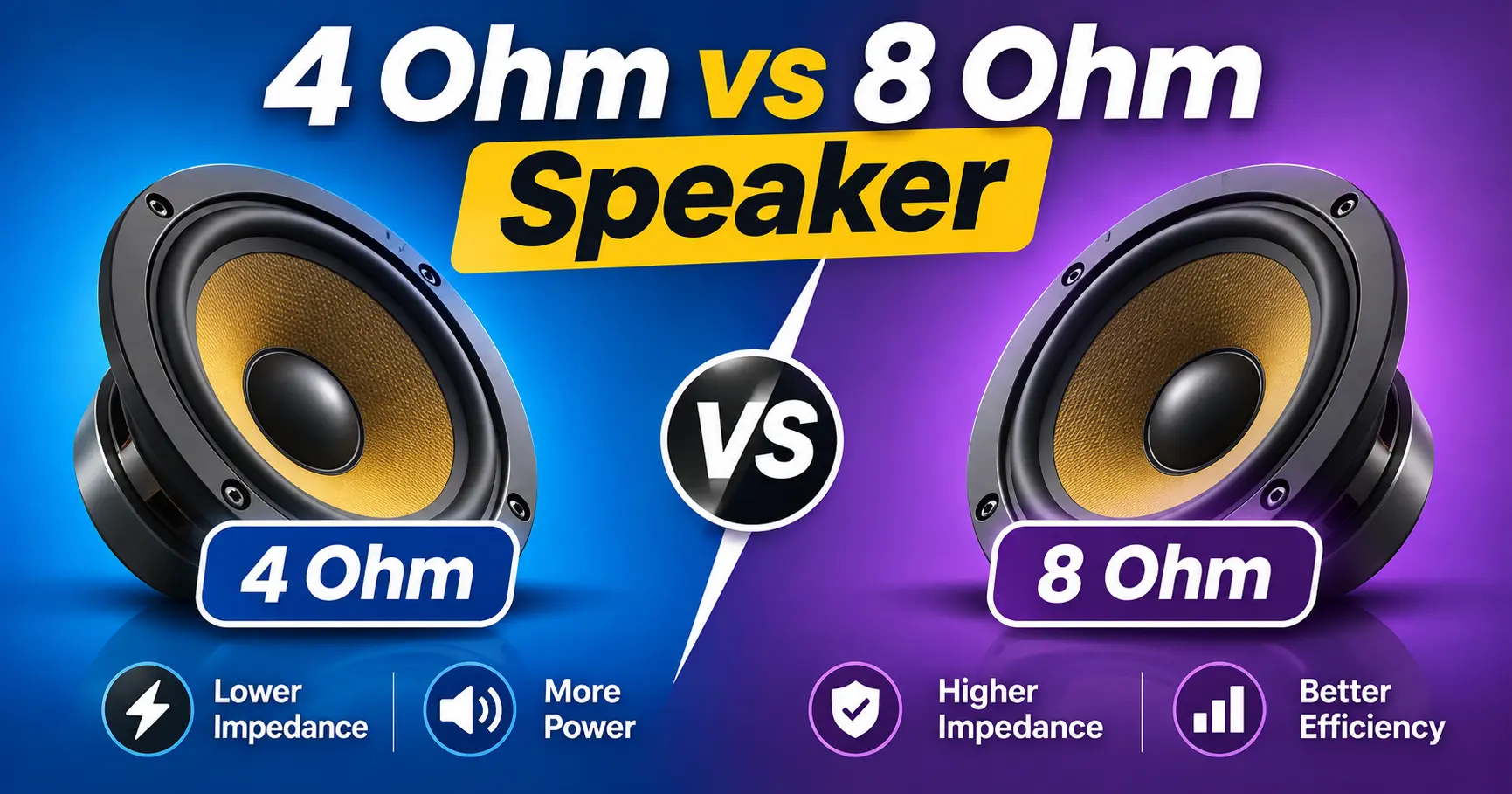
The 4 ohm and 8 ohm numbers tell you a speaker’s impedance, which is the electrical load it puts on your amplifier. A 4 ohm speaker pulls more current and can play a little louder, but it is a harder load that needs an amp built for it. An 8 ohm speaker is easier to drive and the safe pick for most home systems. The right choice depends on what your amplifier can handle, so check that first.
When you shop for speakers, you will spot a small number with the ohm symbol next to it, like 4Ω or 8Ω. A lot of people see “4 ohm vs 8 ohm speaker” on a box or a speaker terminal and feel stuck. That number is the speaker’s impedance, and it changes how your amplifier works, how loud your sound gets, and whether your gear stays safe. This guide breaks down what the numbers mean, how the two speakers compare, if you can mix or swap them, and how to pick the right one for your amp. The physics stays light and easy.
What Does Ohm (Impedance) Mean on a Speaker?
Impedance, measured in ohms, is the electrical resistance a speaker shows to an amplifier. A low number like 4 ohm lets more current flow and makes a heavier load. A high number like 8 ohm limits the current and makes an easier load. The rating on the box is a rough average, not a fixed value.
The word impedance sounds fancy, but it just means how much the speaker pushes back against the current coming from your amp. Think of a water pipe. A wide pipe, like a 4 ohm speaker, lets more flow through. A narrow pipe, like an 8 ohm speaker, lets less through. This pushback follows a basic rule of physics called Ohm’s law.
The ohm number you see on a loudspeaker, whether it is 4 ohm, 6 ohm, or 8 ohm, is called nominal impedance. That word “nominal” means it is an average. The real electrical resistance moves up and down as the music shifts across the frequency response. An 8 ohm speaker can dip below 8 ohms on some notes, and that is normal. Knowing this one fact helps the rest of the 4 ohm vs 8 ohm speaker question make sense.
What’s the Difference Between 4 Ohm and 8 Ohm Speakers?
The main difference is impedance. A 4 ohm speaker has lower resistance, pulls about twice the current of an 8 ohm speaker at the same voltage, and can play a bit louder. But it works the amplifier harder. An 8 ohm speaker pulls less current, is easier to drive, and fits a wider range of amps.

Here is why the current changes. Ohm’s law says power equals voltage times voltage, divided by resistance. So when you cut the resistance in half, the amp tries to push about double the watts and double the current draw. That extra current is the whole 4 ohm vs 8 ohm amplifier story. A 4 ohm speaker is a low-impedance load, and your amp has to work harder to feed it.
| What changes | 4 ohm speaker | 8 ohm speaker |
| Electrical resistance | Lower | Higher |
| Current draw | More | Less |
| Power at the same voltage | About double | Baseline |
| Load on the amp | Harder | Easier |
| Typical loudness | A touch louder | A touch quieter |
| Common use | Car audio, some subwoofers | Home stereo, AV receiver |
| Amp compatibility | Needs a 4 ohm capable amp | Works with most amps |
4 Ohm Speakers in Short
A 4 ohm speaker draws more power and can hit higher volume when the amp can handle it. That makes it a favorite in car audio and in many subwoofer builds. The catch is simple: it is a demanding load, so the amplifier must be rated for it.
8 Ohm Speakers in Short
An 8 ohm speaker asks less of the amp. It runs cooler, plays nicely with most home gear, and is the common choice for home stereo speakers and an AV receiver. You give up a small bit of top-end power, but you gain easy, safe matching.
Are 4 Ohm Speakers Louder Than 8 Ohm Speakers?
A little. On the same amp, a 4 ohm speaker can pull more power and may be about 2 to 3 dB louder than a matching 8 ohm speaker. You can hear that gap, but it is not huge. It takes about ten times the power to sound twice as loud, so impedance by itself does not change volume by much.
Loudness works in a steady, slow way. Each time you double the power going to a speaker, you add only about 3 decibels (dB) of volume, or SPL. Four times the power adds about 6 dB. So a 4 ohm speaker’s extra power gives a small bump, not a giant jump.
One more thing counts just as much: speaker sensitivity. The sensitivity rating tells you how loud a speaker plays from one watt of power. A high-sensitivity 8 ohm speaker can get louder than a low-sensitivity 4 ohm one. That is why the 4 ohm vs 8 ohm subwoofer choice often leans toward 4 ohm in car builds, where the extra power helps bass, but sensitivity still shapes the real result.
Do 4 Ohm Speakers Sound Better Than 8 Ohm Speakers?
Not on their own. Impedance does not set sound quality. The driver design, the cabinet, the crossover, and the amp match matter far more. A well-built 8 ohm speaker can sound better than a cheap 4 ohm one.
When people ask about 4 ohm vs 8 ohm speaker sound quality, they often think a lower ohm number means cleaner audio. It does not. The parts inside the speaker do the real work. The voice coil, the crossover that splits the sound, and the box shape all shape what you hear. A lower load can let a strong amp push more power for bass, and a good amp with a high damping factor can keep the woofer tight. But a low ohm number promises nothing by itself. Push any speaker past what the amp can give and you get clipping, which sounds harsh and can even harm the speaker.
Matching Speakers to Your Amplifier (the Part That Matters Most)
This is the step that settles most of the confusion. Your amplifier or AV receiver lists the speaker impedance it supports. You might see “100 watts at 8 ohms,” “4 to 8 ohms,” or “4 ohm stable.” Read that line before you buy or swap a speaker. The amp decides the safe choice, not the ohm number alone.

Can I Use 4 Ohm Speakers With 8 Ohm Amp?
Only if the amp is built to handle a 4 ohm load. A 4 ohm speaker pulls a lot of current, and on an amp rated for 8 ohms only, it can pull too much. The amp can run hot, start clipping, distort, or drop into protection mode and shut off. The voice coil and the amp both heat up fast at high volume. Many modern receivers from brands like Denon, Yamaha, and Marantz can drive 4 ohm speakers at normal levels, but always check your own model first.
Can I Use 8 Ohm Speakers on a 4 Ohm Amp?
Yes, and this pairing is safe. The amp sees an easier load. You simply get a little less power and a little lower peak volume than you would with a matching 4 ohm speaker. Nothing gets stressed. This is the low-risk direction, so when in doubt, leaning toward 8 ohm keeps your gear happy.
Can You Mix 4 Ohm and 8 Ohm Speakers?
You can, but do it with care. Mixing them changes the total load your amp sees, and it can leave one speaker quieter than the other. The way you wire them matters a lot, so a quick look at a series or parallel circuit helps.
Here is how the wiring math plays out:
- Two 8 ohm speakers in a parallel circuit drop to about 4 ohms.
- Two 4 ohm speakers in series rise to about 8 ohms.
- Two 4 ohm speakers in parallel fall to about 2 ohm, which many amps cannot handle safely.
So series vs parallel wiring is really a tool for setting the total load. If you keep the combined number inside your amp’s rated range, you are fine. If the wiring pushes the load down to 2 ohm on an amp that only likes 8 ohms, you risk overheating and shutdown. When you are not sure, keep speakers of the same impedance on the same channel.
Why Are Car Speakers 4 Ohm and Home Speakers 8 Ohm?
It comes down to voltage. A car runs on a 12V electrical system, which is low voltage. Lower 4 ohm speakers help the amp pull more power from that small voltage. Home amps run on much higher wall power, so an 8 ohm load is easier and became the standard there.
This split is why the 4 ohm vs 8 ohm car speakers debate almost always lands on 4 ohm for the car. Most car speakers are 4 ohm, and car subwoofers sometimes go even lower, down to 2 ohm, to squeeze out more bass. In car vs home audio, the home side sticks with 8 ohm loudspeakers because the amps have plenty of voltage and want an easy, steady load. Both setups work great. They are just built around different power sources.
4 Ohm vs 8 Ohm Speaker: Which Should You Choose?
Pick based on your amplifier, not the ohm number by itself. If your amp or AV receiver supports 4 ohms, both work. If it lists 8 ohms only, use 8 ohm speakers. People who ask “4 ohm vs 8 ohm speaker which is better” want a single winner, but there is no overall winner. The right match beats the “better” number every time.
Use this quick guide to decide:
| Your setup | Best pick |
| Amp rated for 8 ohm only | 8 ohm speakers |
| Amp rated 4 to 8 ohm | Either one works. Go 4 ohm for a bit more output, or 8 ohm for a cooler, easier load |
| Home theater or an AV receiver with many channels | 8 ohm is the safe pick for most people |
| Car audio or a subwoofer build | 4 ohm is the standard |
| Not sure what your amp supports | Go 8 ohm to stay safe |
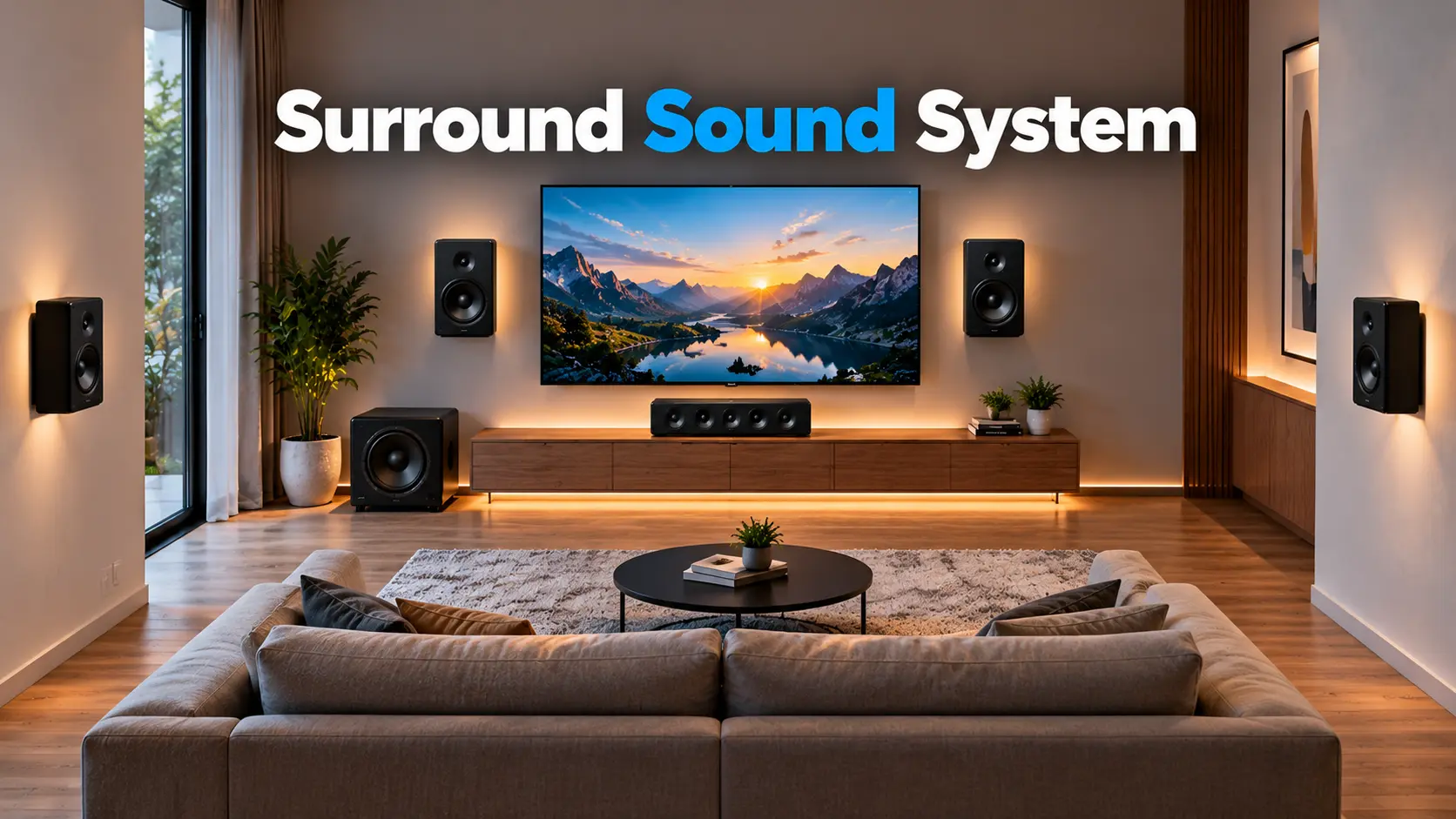
So if you are asking “is 4 ohm or 8 ohm better for home theater,” the answer for most buyers is 8 ohm. It keeps a multi-channel receiver cool and stable. If you run car audio or chase deep bass with the right amp, 4 ohm earns its place. Check the amp label, match the load, and you are set.
The Simple Takeaway
The 4 ohm vs 8 ohm speaker choice is not about which number wins. It is about matching the speaker to what your amplifier can safely drive. Check your amp’s rated impedance, then pick the speaker that fits. Go 8 ohm for most home setups and 4 ohm for car audio or a capable low-impedance amp.
After you swap or wire new speakers, play a song you know well and listen for clean, balanced sound on both sides. A quick speaker sound test can help you spot a weak channel, buzzing, or any drop in clarity. For more plain-language audio guides and free sound tools, At Fixmyspeaker.
Frequently Asked Questions
Is 4 ohm or 8 ohm better for speakers?
Neither one is better for everyone. A 4 ohm speaker can give more power and a little more volume on an amp that supports it. An 8 ohm speaker is easier to drive and fits more gear. The best pick is the one that matches your amplifier’s rated impedance.
Can I use a 4 ohm speaker with an 8 ohm amplifier?
Only if the amp is rated to handle a 4 ohm load. On an 8 ohm only amp, a 4 ohm speaker can cause overheating, distortion, or a protection mode shutdown, mostly at high volume. Check the amp’s spec first.
Can I put 8 ohm speakers on a 4 ohm amp?
Yes, that is safe. The amp sees an easier load. You just get less maximum power and slightly lower peak volume than you would with a matching 4 ohm speaker.
Are 4 ohm speakers louder than 8 ohm?
Usually by a small amount, around 2 to 3 dB on the same amp, because they pull more power. You can hear it, but it is far from twice as loud, and speaker sensitivity can matter more than the ohm rating.
Can I mix 4 ohm and 8 ohm speakers?
You can, but it changes the total load and can make one speaker quieter. Watch your series and parallel wiring so the combined load stays inside your amp’s safe range.
How do I check my speaker’s impedance?
Look on the back of the speaker near the terminals, on the box, or in the manual. It is listed in ohms, often as nominal impedance. A multimeter reading will be a bit lower than the printed number.
Does lower impedance mean better bass?
Not by itself. A strong amp may send more power into a 4 ohm load, which can help bass, but the box, the driver, and the tuning matter far more.